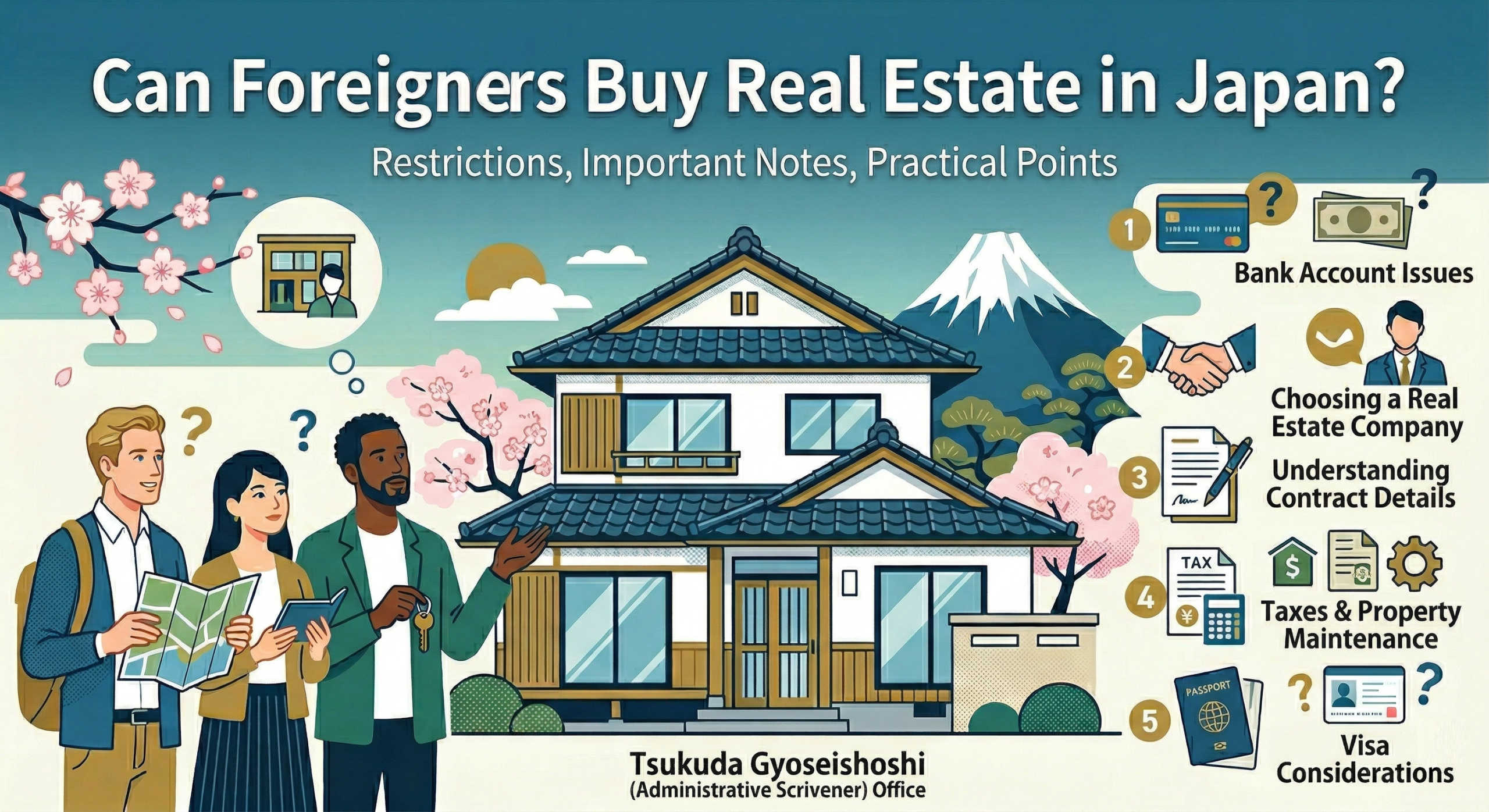
Can Foreigners Buy Property in Japan? | Key Rules, Risks, and Practical Considerations
“Can foreigners buy property in Japan?”
“Do I need a visa to purchase real estate?”
“What risks should I be aware of before buying?”
These are common questions we receive from overseas clients.
The short answer is: Yes, foreigners can purchase real estate in Japan.
However, the practical process involves several challenges that are often overlooked.
This article explains not only the legal framework, but also the real-world issues that frequently cause problems.
Can Foreigners Legally Buy Property in Japan?
Japan does not impose general restrictions on foreign ownership of real estate.
- No residency requirement
- No visa requirement for purchase
- Both land and buildings can be owned
From a legal standpoint, foreigners are treated similarly to Japanese buyers.
However, this is only the legal aspect. In practice, the situation is more complex.
Key Practical Challenges
1. Bank Account Issues
Opening a Japanese bank account without residency is extremely difficult.
This leads to several problems:
- Difficulty transferring purchase funds
- Limited access to financing
- Challenges in paying taxes and maintenance fees
Even cash buyers may face operational issues without a local account.
2. Real Estate Agent and Management Constraints
Not all real estate agencies are willing to work with foreign clients.
- Language barriers
- Concerns about contract understanding
- Communication risks
As a result, finding a suitable agent is often the first hurdle.
3. Contract and Legal Understanding
Japanese real estate contracts are detailed and often complex.
Without proper understanding, buyers may face disputes later.
- Repair obligations
- Penalty clauses
- Termination conditions
4. Taxation and Ongoing Management
Owning property in Japan comes with ongoing responsibilities:
- Property tax (fixed asset tax)
- Management fees and maintenance reserves
- Tax filings (depending on usage)
For non-residents, establishing a reliable management structure is essential.
Relationship with Visa Status (Important)
Purchasing real estate in Japan does not grant any visa status.
This is a common misconception. Ownership of property alone does not lead to residency rights.
However, real estate may become relevant in certain situations:
- Using the property as an office for a Business Manager Visa
- Incorporating real estate into a business plan
In such cases, property and visa strategy must be aligned from the beginning.
Common Mistakes
- Purchasing without a clear management plan
- Unable to open a bank account after purchase
- Assuming the property can be easily rented out
- Believing that property ownership leads to a visa
These issues are typically caused by lack of proper planning.
How to Avoid Problems
- Prepare your funding and banking structure in advance
- Work with experienced real estate professionals
- Fully understand contract terms before signing
- Clarify how the purchase relates to your visa situation
The key is not to proceed based on assumptions.
Conclusion
Foreigners can legally purchase property in Japan, but the practical challenges are significant.
Success depends not on the legal framework, but on proper preparation and execution.
Consultation & Contact
If you are considering purchasing real estate in Japan as a foreigner and are unsure about selecting a real estate agent or how it may affect your visa status, it is advisable to clarify these points before moving forward.
Our office operates on an appointment-only basis. To request a consultation, please contact us via:
▶ Contact Form
▶ Email: info@tsukuda-visa-support.online
Proceeding without properly structuring your funding, contract terms, and visa considerations may lead to significant complications later. It is safer to review these aspects in advance.


